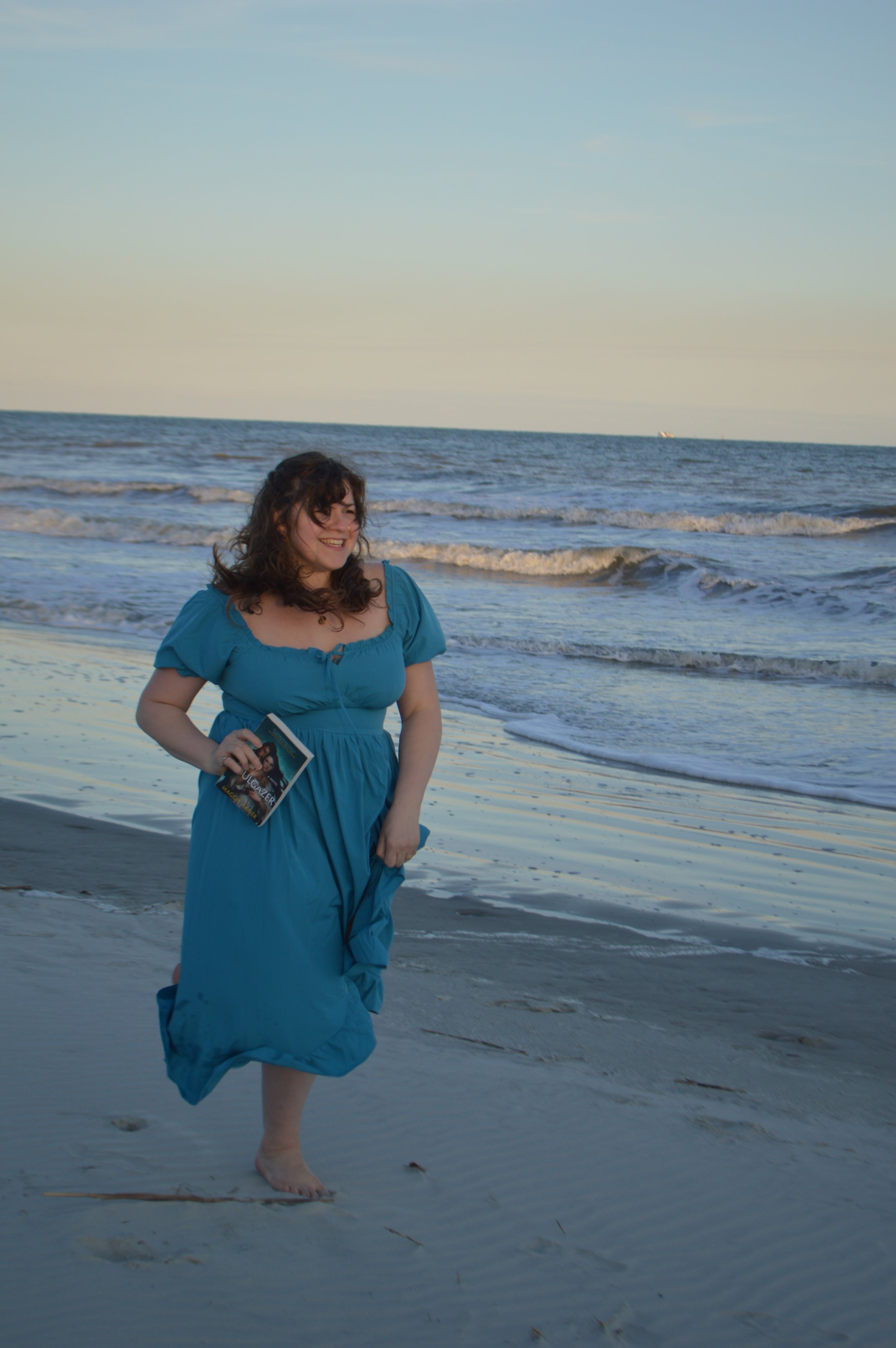
Purity Culture, Meet Pirates

i wish i could hold her now
If I’m being honest with myself—and I do try quite hard to be—this blog is being written so far behind schedule because I don’t want to face the reality. I don’t want to sit with Saoirse’s story and remember that it is mine. To see the wounds I carried when I wrote this book—wounds that are still raw, freshly-scarred and throbbing every time I read a line that reminds me how very lonely and broken I once was.
But it’s time.
Time to name the thing—the why—and wrap that girl in my arms in hopes that you, readers who see yourself in Saoirse, will feel that embrace and maybe find a path to healing too.
One final note: When I reference Purity Culture, I’m talking about the 90s-00s movement in Christian culture propelled by the “True Love Waits” phenomenon, but also the pervasive ideology that purity (aka perfection) is the end goal of human efforts and existence, setting an impossible standard people will always fail to reach. In this blog, I’ll speak to my lived experience growing up under that ideology, and the deep psychological harm it caused as well as my religious trauma, body trauma, etc. with as much candor as I can, while also respecting my own need for privacy. Please read with caution.
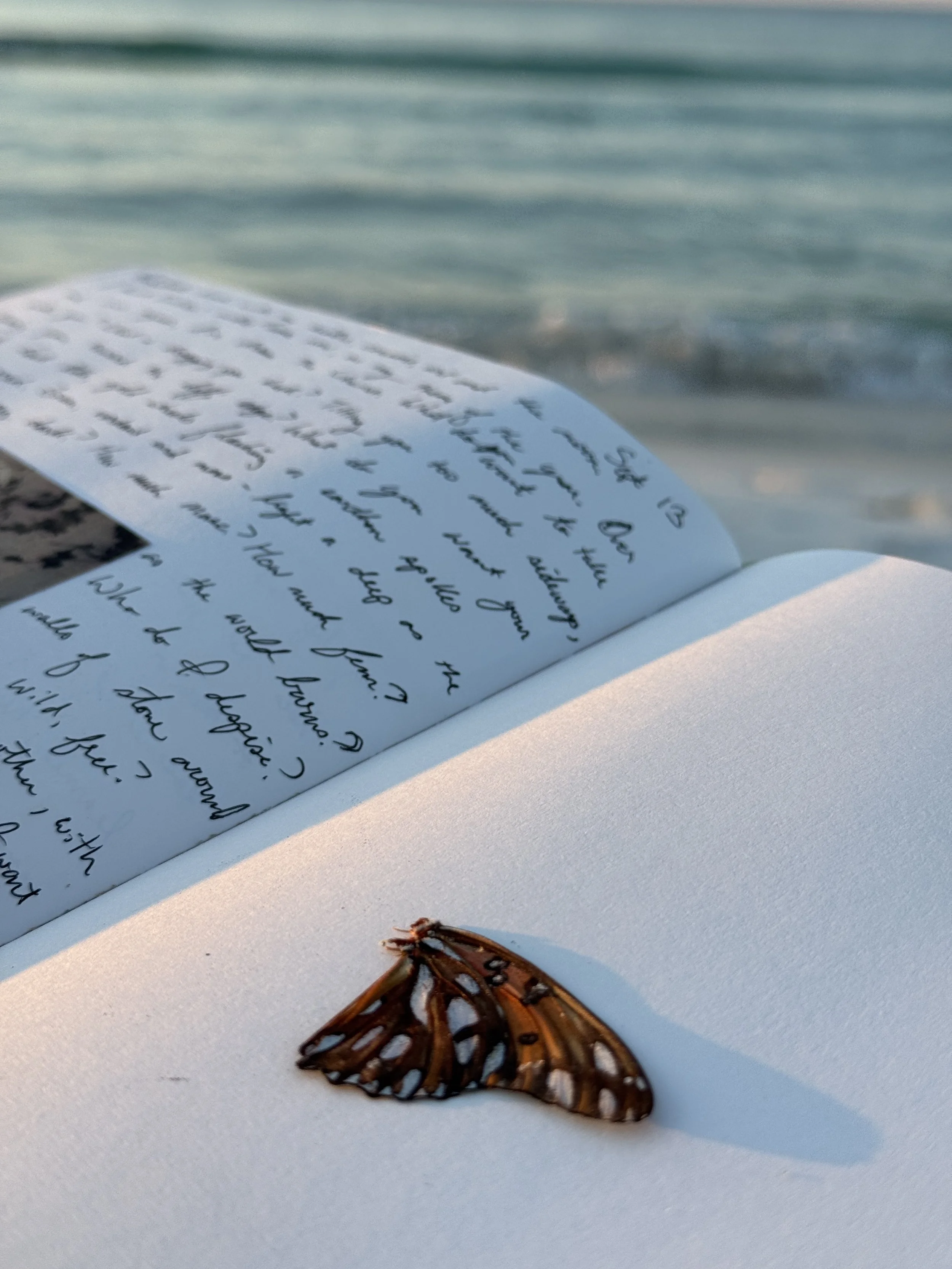
“Because I am wrong inside. Broken and unnatural…”
I was born with a tainted soul.
That is the knowledge I held close to my chest as I grew up: that I was an inherently wicked creature. A wretch. An irredeemable sinner from the moment I drew my first breath. Of course, there was one way out lain down before me—just one.
To achieve redemption, I could submit to the god who’d broken me in the first place. Beg his forgiveness. Contort into shapes that might please him. Shrink myself to fit the mold—quite literally as a lifelong fat girl. I could abstain from physical pleasures, suffer in dignified silence where no one would see, keep my body untouched and eye from wandering, marry a man who’d “take headship” over me (aka in the spiritual hierarchy, I’d go from my father’s reign to my husand’s) and pray he would have a strong hand to outmatch my stubborn will. I could bear children and serve my family, my community, my husband, head bowed in submission until I was wrinkled and worn, and then, maybe then, I’d be saved.
But by fourteen, I already knew that I’d failed.
I remember it well, the moment I came across a book in the library that gave me language for the thing that had happened to me as a child—the reason I never had a hope of being “pure.” Still, it didn’t keep me from trying. Didn’t stop me spending years of my life begging for god to undo it, much like Saoirse prayed for the gods to take away her cursed magic. And then, when I grew older and my body expanded, desires taking root inside wounds I’d barely acknowledged let alone healed, I tried bodily to rip them out, hating their presence—hating myself. I would pinch my flesh viciously, cut into it with my nails, call myself the nastiest names, then weep furiously in the bathtub and and plead and cry and beg to be made whole once more.
I was angry. Confused. Scared and impossibly hurt.
Damaged goods.
And every year that passed where I could not drop a dress size, every year where I failed to catch a good, Christian boy’s eye, was confirmation that I was a fuck up. A failure. Too much and not enough, going through the world with an apology perched on my tongue. I could not trust my own desires, could not listen to or believe the intuition in my gut—how many verses and sermons taught me that? I had no concept of bodily autonomy, couldn’t distinguish my “yes” and “no.” So when a “good, Christian boy” finally did pay me attention, well…
I was raised to submit.
Even when my body, heart, and mouth said no.
This is the place Saoirse came from. A lot of raw pain and grief in the aftermath of my early twenties, when I finally stepped outside that culture and began to see it for what it was. I was damaged, but it wasn’t my fault. I had nothing to apologize for, nothing to atone for. I was a child, and then a young woman, taken advantage of by an abuser with a keen eye.
I was Saoirse.
And like Saoirse, once I was standing outside of purity culture and seeing myself for the first time with clear eyes, I had no idea who I was.
Until the pirates came.
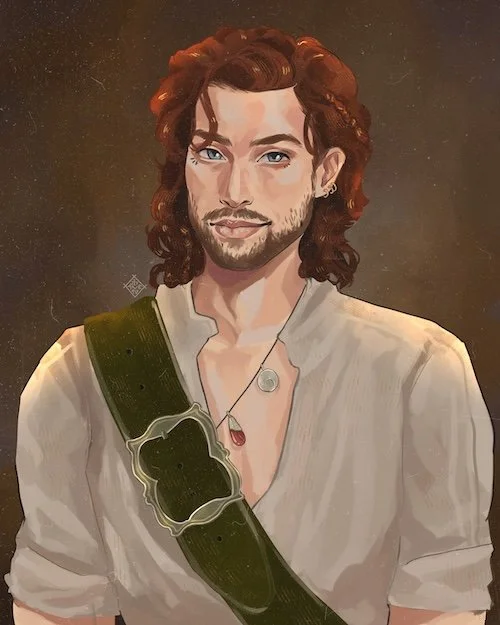
Portrait illustrated by Jannel
“They're all so familiar with this world I've barely explored, their bodies safe havens for their own hands and others to explore. It's a world I've spent a lifetime denying myself...”
Okay, so nobody called me “love” with a cheeky wink, nor did a silver-tongued charmer with a devilish smile sweep me away on his ship, but the principle still stands. To unlearn and remake myself, I had to leap—to depart from what and who I’d always known, and throw myself into circles of curious minds and tarnished souls. People I’d been both wary and envious of for their swagger, their worldly knowledge, and their unshakeable sense of self.
I had to run away with the pirates.
Now pirates, to me, represent many things, but chief among them is liberation. There is a quickness to their thinking—a crafty way in which they see and navigate the world. Their speech is clever, their steps sure. They are daring, resilient, dare I say sexy creatures, limited only by their own capabilities and whatever wind is blowing off shore.
In short, pirates are the antithesis of purity culture—making them the perfect vessel for this book.
(Note: obviously I’m talking about vibes here, not actual real life historical pirates)
Building out the crew of Faolan’s ship gave me a chance to plunder my memories of working in restaurants and living in new cities, skirting the fringes of boisterous, friendly, wonderful people who seemed so far out of my reach. Every encounter pushed my understanding further, every brush with new ideas, cultures, worldviews broadening my mind. I met girls who didn’t see themselves as problems to be handled, who laughed with their bellies and kissed without a second thought.
Saoirse had to be confronted with examples of upbringings that were nothing like hers to see the flaws in her own. To realize it wasn’t normal to grow up believing you were broken. To be allowed and encouraged to take up space. If it was just Faolan guiding her through this, it wouldn’t be enough. She needed friends. Community. Support from people who may not have understood her, but who were at least willing to try—to reach out a hand in spite of the fact she might not take it.
At least, not until that barrier, too, falls.
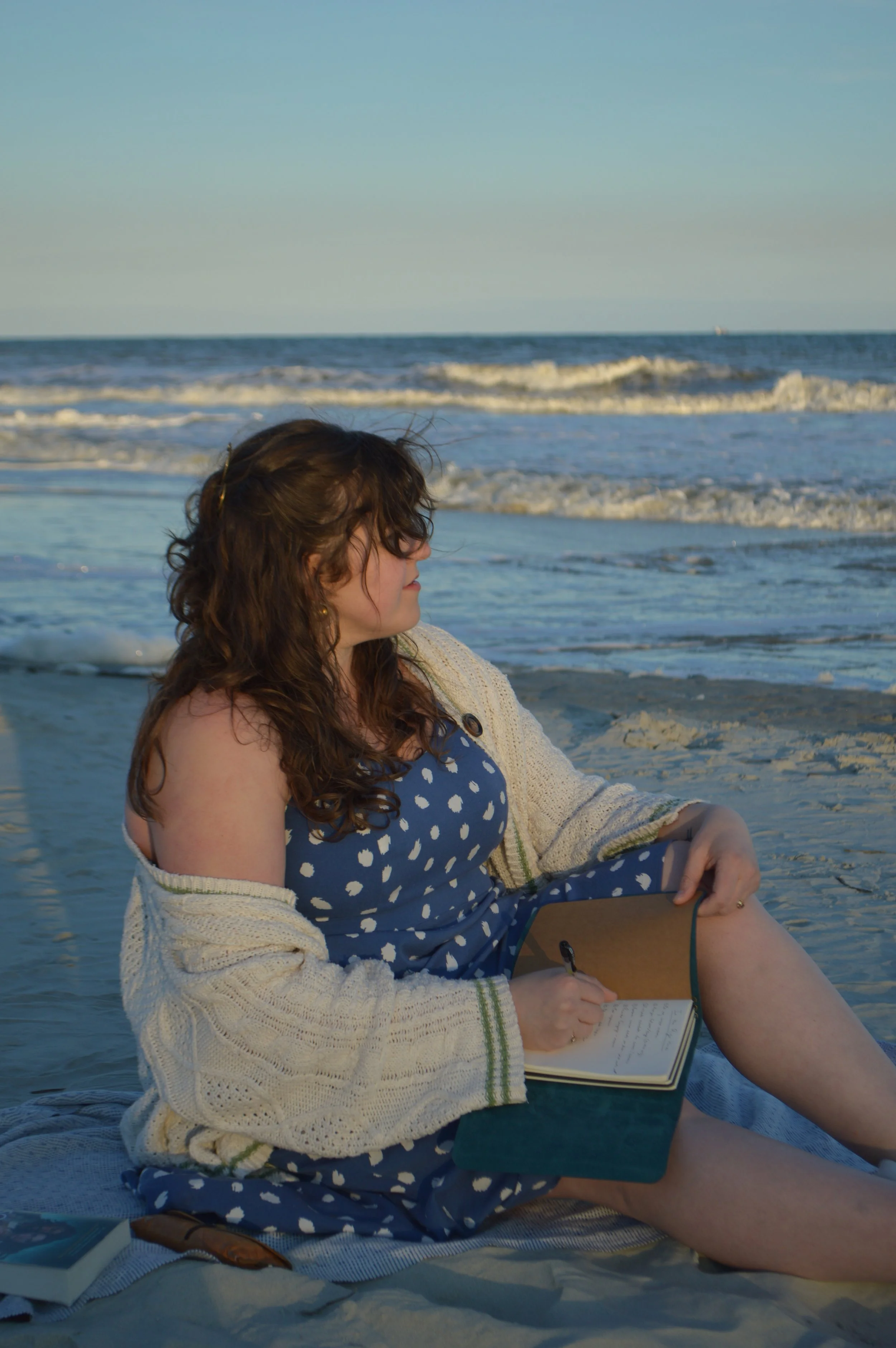
“Touch is a thing life has starved me of.”
Last year, I came across a trade review that called Saoirse a “meek, virginal heroine” who needs her “worldly savior” to teach her about sex—a bad faith take that somehow managed to be both wildly reductive and conceptually flawed.
At first, I laughed because it felt so utterly ridiculous…and then my stomach twisted. Sweat broke out across my neck. I felt angry, hurt, misunderstood once again. And the thing is, if you’ve never been told from infancy not to trust your body, emotions, desires, thoughts, feelings, etc—that it is sinful and dangerous to want anything at all…I guess maybe you would see it that way.
But here’s why I think it was wrong.
Saoirse has a fucked up relationship with pleasure. Like her creator, she is so far removed from her own body by the time the story begins that even naming the desire for human connection is a significant hurdle, let alone taking action to see it done. It is a language she has to start learning—not just to name the physical attraction between her and Faolan, but the casual intimacies with her new friends as well. Saoirse starts the book so painfully touch-starved, shrinking back from others because she knows it will only ever hurt.
And then comes Faolan. Flirtatious yet respectful, curious of her nature and boundaries but unwilling to flatten them down. For such an impatient man, he is patient for her—giving her space to get used to him, holding out an open hand. And at every point he could have pressed harder—the ship’s wheel, their cabin after fever, and tucked in Aisling’s cove—he pulls back. Allows her the choice to stay or leave him. To explore at her own pace, answering questions and providing guidance without mockery, much smugness, or disdain.
That is what I want people to remember of those moments between them. That he recognized her wounds, and gave space for them to heal. That she was never broken, sullied, tainted, or impure.
That thinking like a pirate can save you from purity culture—or at the very least, give you a boost to your sails as you set out to explore.