In Defense of the Soft Girl
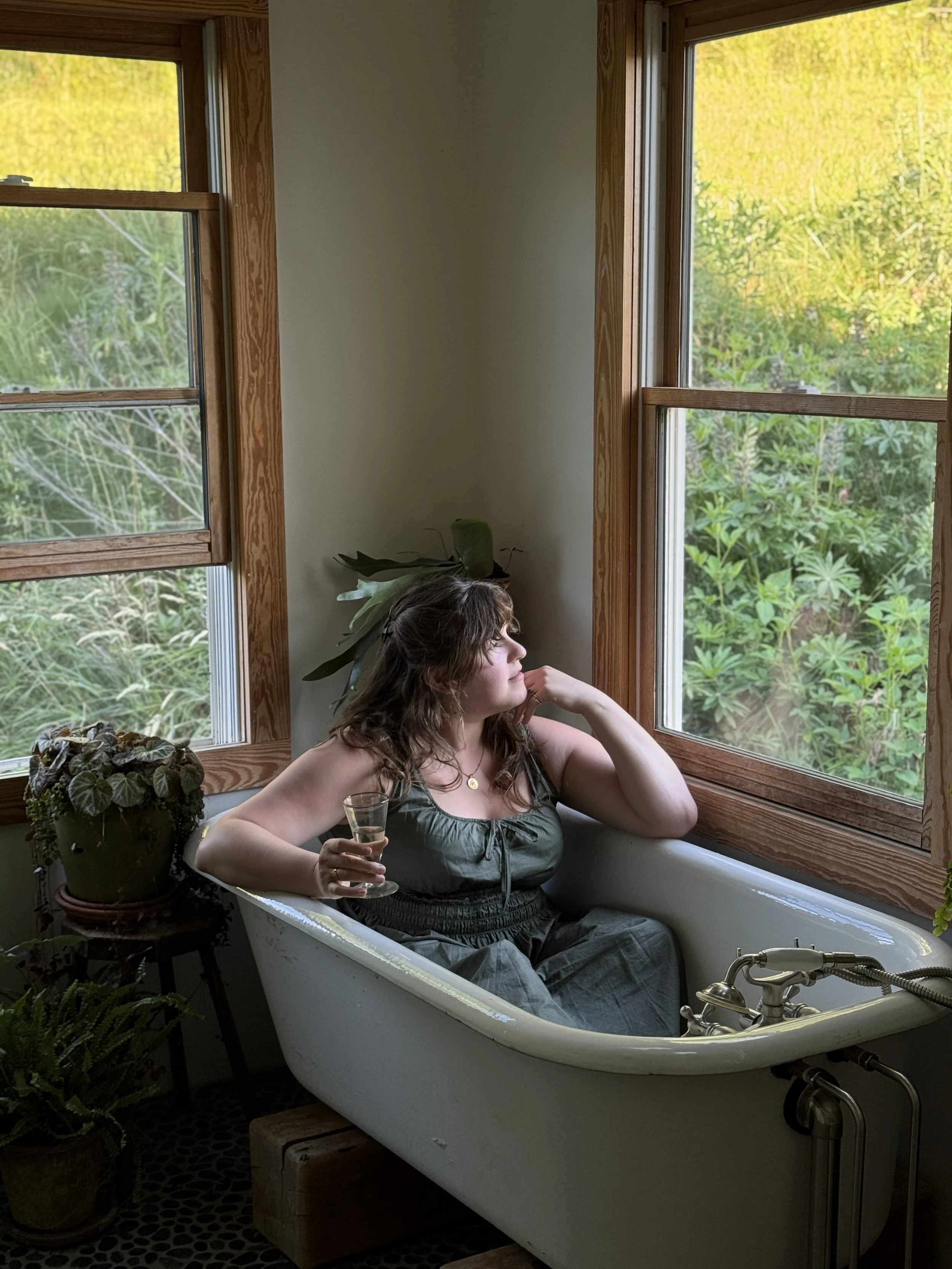
“I do not find worthiness in virtue
I no longer try to be good
It didn’t keep me safe
Like you told me that it would”-Florence + the Machine, “Sympathy Magic”
do you see me now?
I’ve always hated being misunderstood.
It’s a moment of gut-pitching, shame crawling like a wayward ant up my throat. It is a sickening recalibration—the zooming out of a camera lens to examine the last five, ten, fifteen months, studying every interaction to puzzle out the exact moment where I went wrong. Why my colors bled and edges warped when I’d spent so many years learning to contain them.
Learning to be small.
I used to go to great lengths to make myself small. All the time, I would pinch and suck and shrink myself to try and fit, but it never was quite enough. Even on the days my mask wore heaviest, the details precise and the manners pristine, the hair would still prick on the back of my neck—a warning that someone had glimpsed through the cracks and decided something about me. Made me into a hero. A villain. A caricature or a concept.
A creature they could easily digest.
And god, there was a time I wanted to be one. Easy to understand. Easy to love. I fought so hard to be that girl—good, uncomplicated, low maintenance, pure. But no matter how many years I sank into it, the effort always failed.
It used to be that I thought there was something fundamentally wrong with me: born with feelings too big, and skin too thin to hold them. Always I carried this hollow, pulsing ache of loneliness—a particular swell of pain as proof that what I’d feared was true.
This world was not for me and I was not meant for this world.
Yet here I was, existing in it…so what the fuck was I supposed to do?
Enter Saoirse.
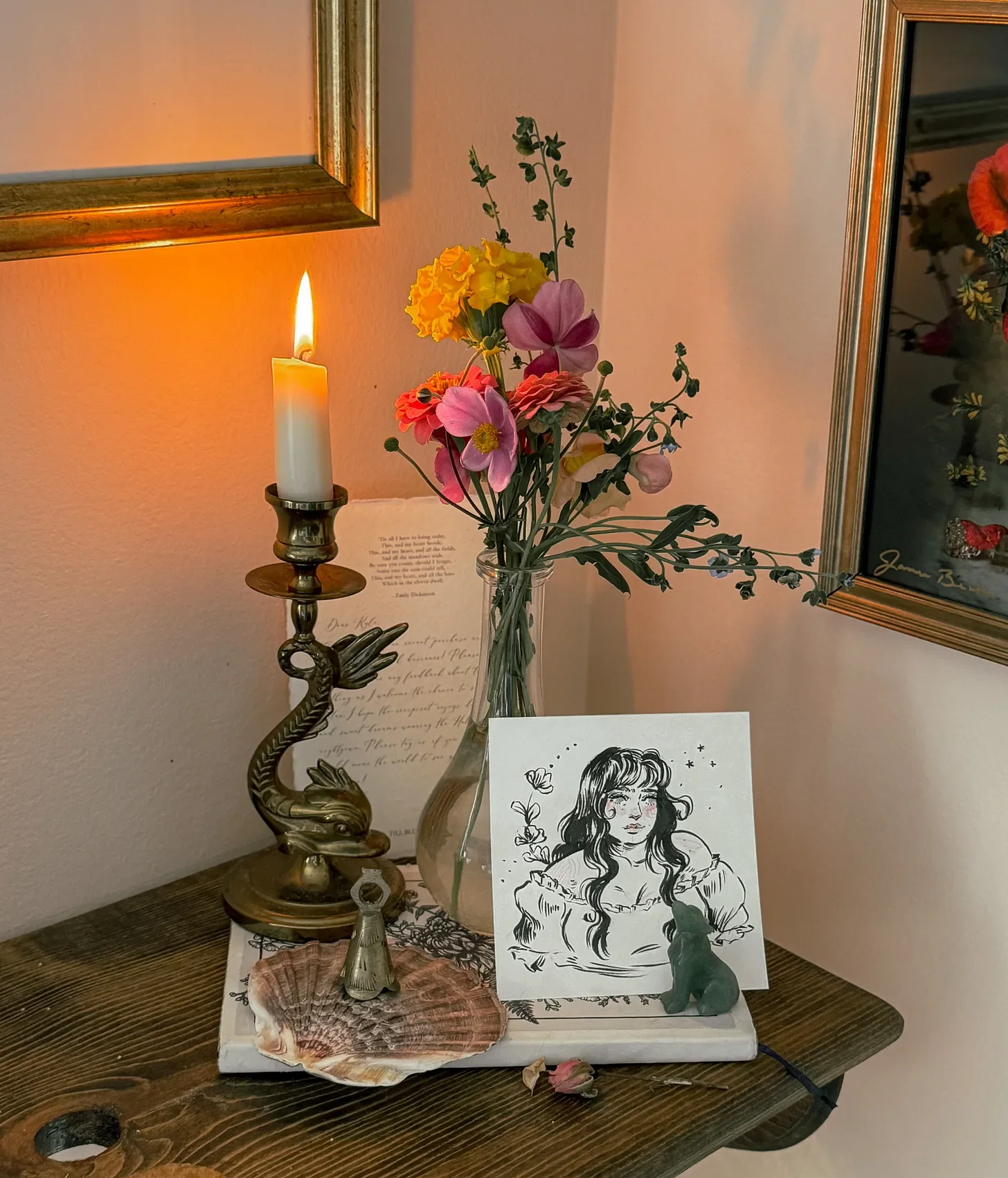
Illustration by Gaiatri Sud @maeowl
sympathy magic
The night I first met Saoirse is hazy with storm-swept dreams. I felt her before I saw her—felt that tender, hesitant longing before I ever knew her name. In that dream, Saoirse was unwanted. Unloved. Not fit for her role in her father’s kingdom, not fit for anything it would seem, until the night she veiled herself and leapt into the ocean to be plucked out by the then pirate king.
That was as far as our initial encounter went, yet for years after, before I ever put pen to page, I thought often of that girl. Her heart that bruised too easily. Her stubbornness that led her off that cliff.
Throughout my early to mid twenties, I began deconstructing—from religion, harmful ideologies, purity culture, diet culture, etc. Over the course of a decade, I began to understand that the “muchness” of me was not a curse. I was not some wicked creature for wanting, nor was I “not enough” as I’d also ironically believed. Like Saoirse, when defined by the very narrow margins of the roles presented to me, I would always be deficient.
So I stopped.
Or at least, I tried to.
And I continue to try—but here’s the thing: when you’ve spent your entire life being told that dying to yourself is the most sacred act you can perform, it will take another lifetime to fully unlearn it. To claim your space, your voice, your power. To live in the body that may have once been your enemy, and heal the wounds your trauma left behind.
It is unnerving. Exhilarating. Formidable and freeing to define yourself.
And yet…
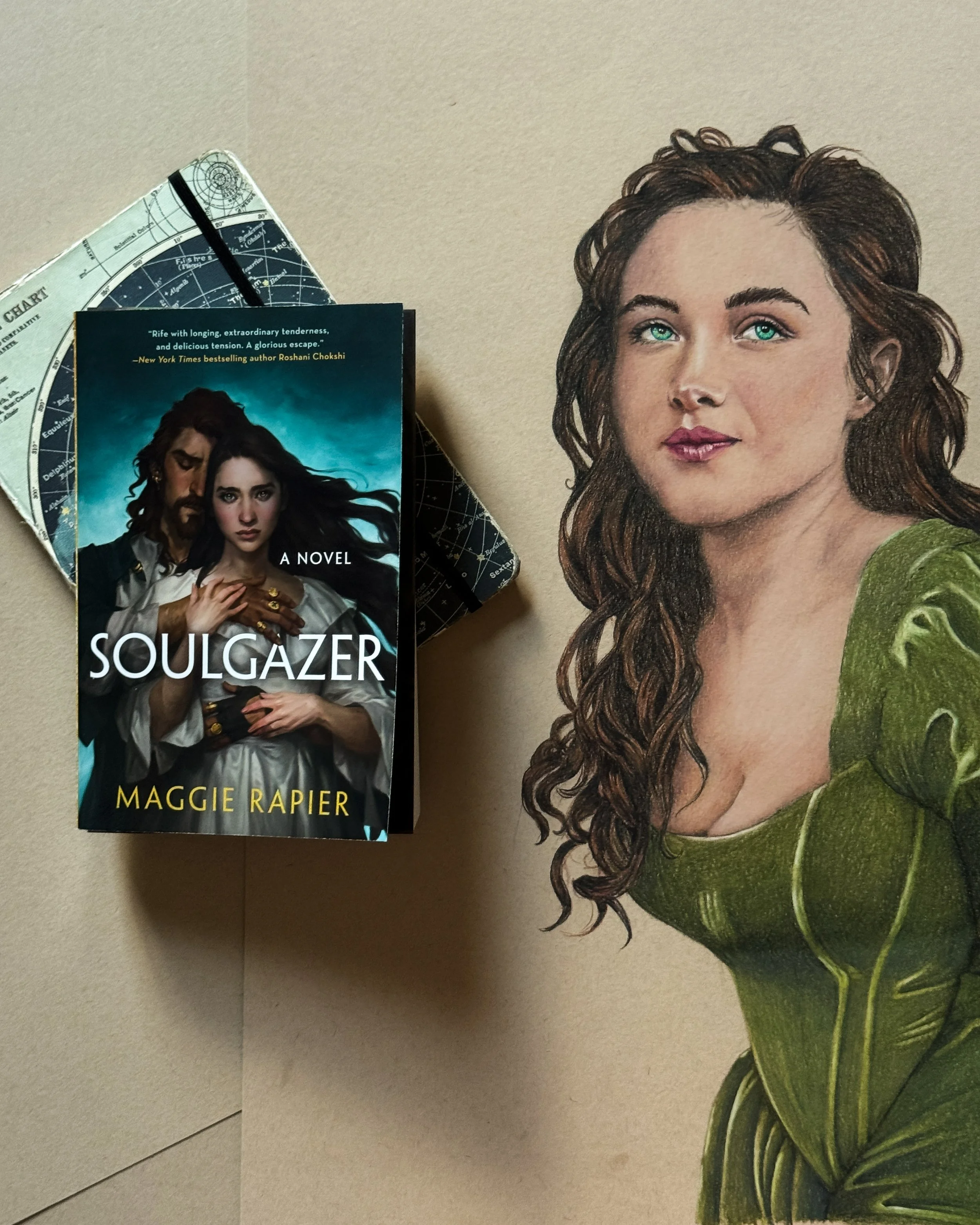
Hand-drawn illustration by Aurora Whittet Best
in defense of the soft girl
Since last summer, I have come across at least a dozen reviews saying the reader wanted to slap my main character.
They said she was too indecisive, hesitant, timid, annoyingly meek. Many could not understand why it took her so long to trust Faolan, or to believe it when he said he cared, and others found it ridiculous she would submit to her father’s authority or others’ whims. I’d like to say I laughed the first time I read this, or shrugged it off with a devil-may-care grin.
Instead, I felt that old stomach-clenching sensation. The unnerving twinge that says I’ve been misunderstood once again.
There are certain archetypes you come across in the world of fiction—especially in romantasy, where my books are currently shelved. Some heroines are bookish and bitingly clever. Others (arguably the most popular) are snarky badasses wielding combative magic and swords. Both are delightful and necessary, but there is another type that slips under the radar. Heroines who are not forthright or fighters, dismissed as weak and forgettable—the eyeroll worthy damsel-in-distress.
The soft girl.
Let me be clear with my definition: I know “soft girl” is a fashion trend for this particular era, rife with troubling language about “stepping into your feminine” that has fed into potentially harmful paths looping right back around toward patriarchy. This is not that. When I’m speaking to the soft girl literary archetype (and perhaps there’s a better word out there for it), I’m talking about a heroine whose strength is not physical, and whose thoughts are often held back. She is an active participant in her story—but perhaps not always at first. Her steps might be hesitant, her mind calculating, her spine crafted of steel but in need of prompting, support, and time to believe it will not break when she finally reaches for what she wants.
(Note: this does not mean she never fights. It doesn’t mean her default is always internal responses, and it doesn’t mean she’s passive. Angry girls can be soft girls. Soft girls can be angry girls, badasses can also be soft, etc. etc. etc.)
Often, we see these soft girls work within whatever system they’ve been placed in through subtle machinations, guided by their intuition, convictions, feelings that are often discounted because they are deemed untrustworthy. They are called vulnerable with lips curled back in disdain—yet it is often that vulnerability and earnestness that leads them to triumph in the end. Their victories are often hard-won and wildly emotional—these girls who feel too much, but are allowed to exist tenderly and be adored for it rather than suppressed.
Some of our favorites come from this archetype—Tangled’s Rapunzel, Sophie from Howl’s Moving Castle, Tarisai from the Raybearer duology , Scarlet from Caraval, Henry from Red, White, & Royal Blue (because soft girls can be shes, theys, gays, etc., Sansa from Game of Thrones)—and whenever I’ve crossed paths with her archetype, it’s inevitably with a gentle tug on my heart because I feel deeply and truly seen.
That is what I hope my readers will find in Saoirse.
A fellow soft girl whose heart is on her sleeve and head is full of worries, insecure and hopeful, traumatized and healing, and forever and ever trying in spite of it all.
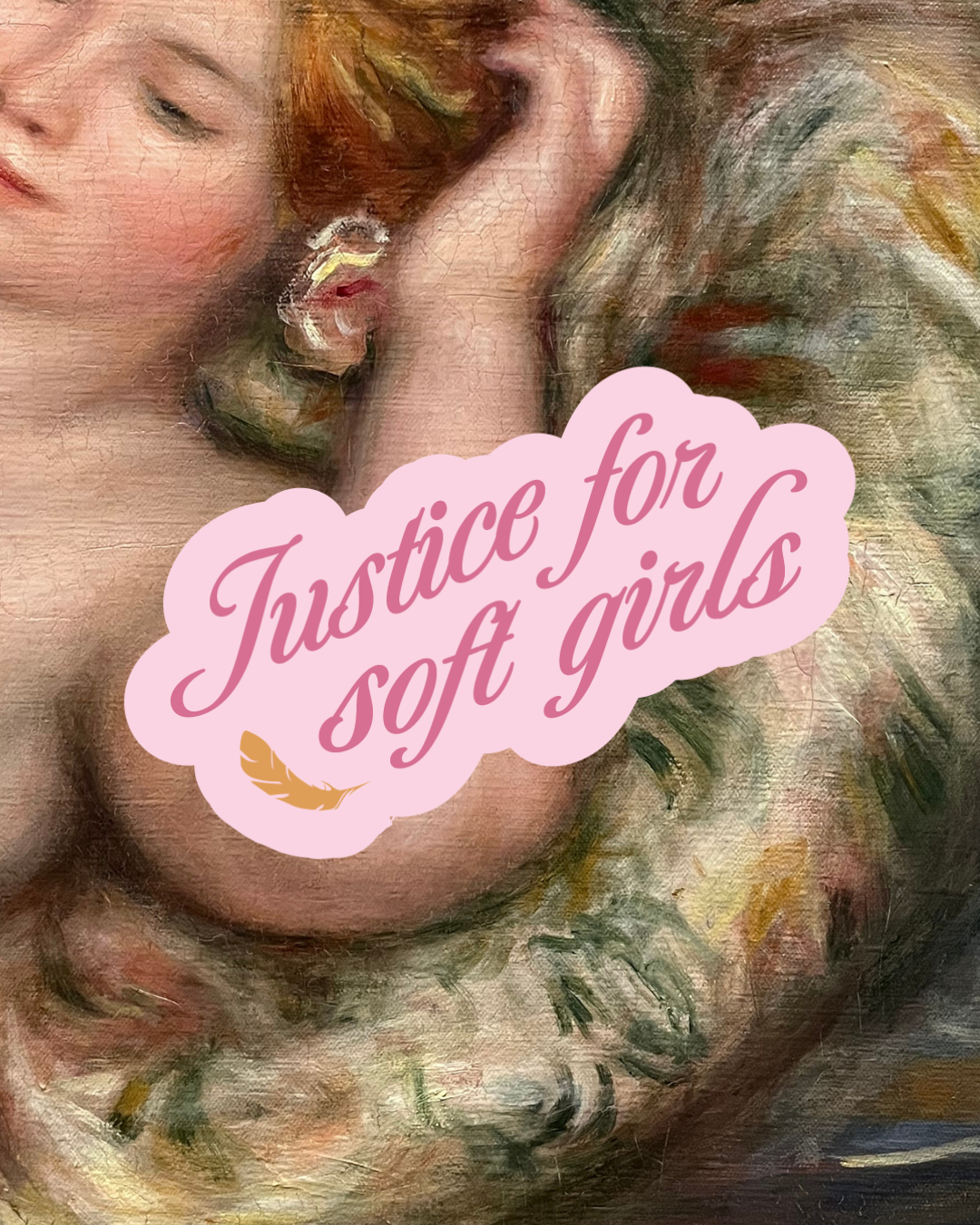
“Justice for Soft Girls” sticker designed by Brittney Arena (@reverieandink), laid over a painting by Renoir
soft girl summer readalong
If you liked what you read here, or are curious to learn more, feel free to join our summer readalong of Soulgazer starting July 5th that will run over the course of 3 weeks, culminating in the release of Wolftamer a month later, on August 25th.
Look out for more deep-dive blogs here, as well as instagram posts, or take it at your own pace.
All are welcome!